
Employee vs. Contractor: IRS Classification Guide for Small Business (2026)
Confused about W-2 vs 1099 classification? This guide breaks down IRS rules in plain English to help small business owners avoid costly payroll mistakes.
PAYROLLTAX INFORMATION
Jerry Blanco
12/25/20255 min read

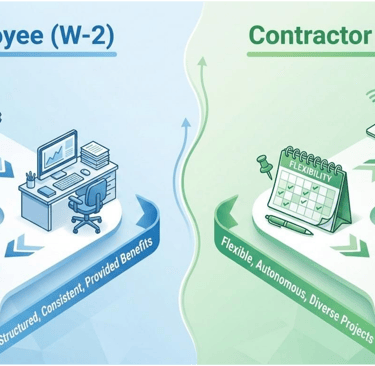
The One IRS Mix-Up That Could Cost Your Growing Business Thousands (And How to Get It Right)
You've just hired your first team member. Exciting, right? Whether it's a virtual assistant to handle your inbox, a graphic designer for your brand refresh, or someone to help with customer service, bringing on help means your business is growing.
But here's where many small business owners hit a snag: Do you classify this person as an employee (W-2) or an independent contractor (1099)?
It sounds like a simple checkbox decision, but get it wrong and the IRS can come knocking with penalties, back taxes, and a headache that'll make you wish you'd paid attention from the start.
The good news? Understanding worker classification doesn't require an accounting degree. Let's break it down in plain English so you can protect your business, stay compliant, and sleep better at night.
Why Worker Classification Matters More Than You Think
When you misclassify an employee as a contractor (even accidentally), the IRS doesn't just send a friendly reminder. They can hit you with:
Back payroll taxes you should have withheld
Penalties and interest that stack up fast
Potential audits of your entire payroll history
Beyond the financial hit, misclassification can also trigger issues with state labor departments, unemployment claims, and workers' compensation insurance. One small business owner I worked with faced a $47,000 penalty because she classified her full-time office manager as a contractor for two years. She genuinely didn't know the difference.
Let's make sure that doesn't happen to you.
The Three Tests the IRS Uses (Explained Like You're Human)
The IRS uses what they call the "Common Law Test" to determine worker status. It boils down to three main factors: behavioral control, financial control, and the relationship between you and the worker. Think of these as three lenses the IRS uses to examine your working arrangement.
1. Behavioral Control: Who's Calling the Shots?
This test asks: Do you control how, when, and where the work gets done?
Employee indicators:
You set their work hours (even if flexible)
You provide training or detailed instructions
You require them to work from a specific location
You supervise their day-to-day tasks
Contractor indicators:
They decide how to complete the project
They set their own schedule
They use their own methods and tools
They work independently with minimal oversight
Real-world example: Your marketing coordinator who works 9-to-5 in your office, uses your computer, follows your social media guidelines, and checks in daily? That's an employee. The freelance copywriter who takes your project brief, writes on their own schedule, uses their own laptop, and sends you the finished draft? That's a contractor.
2. Financial Control: Who Bears the Business Risk?
This test examines: Who has the financial stake and investment in the work?
Employee indicators:
You provide all equipment, software, and supplies
They're guaranteed a regular paycheck
You reimburse their business expenses
They can't really profit or lose money based on their performance
Contractor indicators:
They use their own tools and equipment
They can make a profit or take a loss on the project
They invoice you for services rendered
They market their services to other businesses
They can hire their own assistants or subcontractors
Real-world example: Your bookkeeper who uses your QuickBooks subscription, gets paid $20/hour every two weeks, and uses your office supplies? Employee. The IT consultant who brings their own diagnostic tools, charges a flat project rate, and has ten other clients? Contractor.
3. Type of Relationship: What Did You Both Expect?
This test looks at: How do you and the worker view the relationship?
Employee indicators:
You offer benefits (health insurance, paid time off, retirement)
The relationship is ongoing and indefinite
Their work is central to your core business operations
There's an expectation of permanency
Contractor indicators:
The engagement is project-based or temporary
You have a written independent contractor agreement
They work for multiple clients simultaneously
Their services are supplemental, not core to your business
Real-world example: Your customer service rep who answers phones daily, gets two weeks of vacation, and is enrolled in your health plan? Definitely an employee. The web developer you hired for a three-month website project who has a detailed contract and five other active clients? That's a contractor.
The Gray Zone: When It's Not Crystal Clear
Sometimes workers fall into a murky middle ground. Maybe your VA started as a contractor for a one-time project but now works 30 hours a week exclusively for you. Or your "freelance" social media manager uses your accounts, follows your content calendar, and checks in daily.
When in doubt, ask yourself: If the IRS examined this relationship, which way does the evidence point?
Here's a helpful rule of thumb: If you're controlling the "what" and the "how" of someone's work, treating them like part of your team, and they're working primarily for you on an ongoing basis, they're probably an employee—regardless of what you call them.
How to Handle a Mixed Team (W-2 and 1099 Workers)
Many growing businesses have both employees and contractors. That's completely normal and legal—as long as each person is classified correctly.
Actionable Steps for Managing Both:
For Your Employees (W-2):
Set up payroll through a service like Gusto, QuickBooks Payroll, or ADP
Withhold federal income tax, Social Security, and Medicare taxes
Pay your employer share of payroll taxes (typically 7.65%)
File quarterly payroll tax reports (Form 941)
Provide W-2 forms by January 31 each year
Carry workers' compensation insurance (required in most states)
For Your Contractors (1099):
Have them complete Form W-9 before starting work
Create a written independent contractor agreement
Pay their invoices as submitted—no tax withholding
Keep detailed records of payments
Issue Form 1099-NEC by January 31 if you paid them $600+ during the year
Don't offer employee benefits or control their work methods
Pro tip: Use separate accounts or categories in your bookkeeping software to track employee payroll versus contractor payments. This makes tax time infinitely easier and keeps your records audit-ready.
Red Flags That Scream "Misclassification Risk"
Watch out for these warning signs:
Calling someone a contractor but controlling their daily schedule
A "contractor" who works exclusively for you for over a year
Providing business cards, email addresses, or official titles to "contractors"
Requiring contractors to work in your office during set hours
Paying contractors by the hour instead of by the project
If any of these apply to your situation, it's time to reassess before the IRS does it for you.
What to Do If You Think You Got It Wrong
First, breathe. Mistakes happen, and fixing them proactively is always better than waiting for an audit.
Your action plan:
Review your current workers using the three tests above
Consult with a payroll specialist or accountant (shameless plug: this is exactly what I help clients with)
Reclassify workers if needed and update your payroll system
File Form SS-8 with the IRS if you want an official determination
Consider the Voluntary Classification Settlement Program (VCSP) if you've been misclassifying workers and want to come clean with reduced penalties
The VCSP allows you to reclassify workers going forward while paying only a small percentage of what you would owe in back taxes. It's like an amnesty program for honest mistakes.
Quick Reference Checklist: Employee or Contractor?
Ask yourself these five questions:
Do I set their work hours or location?
Do I provide their tools, equipment, or training?
Do they work almost exclusively for my business?
Is their work central to my core business operations?
Is this an ongoing relationship rather than a project?
If you answered "yes" to three or more: You likely have an employee, not a contractor.
Final Thoughts: When to Get Help
Worker classification isn't always black and white, and that's okay. When you're unsure, investing in a conversation with a bookkeeper or payroll professional can save you thousands down the road.
As your business grows, you'll likely have both employees and contractors at different times—and that's a sign of healthy growth. The key is understanding the difference, documenting your decisions, and staying compliant from day one.
Your business deserves protection, and you deserve peace of mind. Getting worker classification right is one of those foundational pieces that lets you focus on what you do best: growing your business.
Ready to Get Your Payroll Classification Right?
Call-to-Action:
Schedule a 15-Minute Payroll Compliance Review – Let's look at your current team together and make sure everything is properly classified. I'll answer your questions and give you a clear action plan.